William Gear
William Gear RA (1915-1997) was one of the pioneers of post-war British abstraction and among the few British artists to become closely associated with the influential CoBrA movement in Europe. Born in Scotland, Gear studied at Edinburgh College of Art before travelling extensively on the Continent, where he worked alongside artists including Asger Jorn and Karel Appel. These experiences shaped his bold, expressive approach to painting, combining the energy of European avant-garde art with a distinctly British sensibility. Throughout his long career, Gear remained committed to abstraction, becoming one of the most respected figures in British modern art.
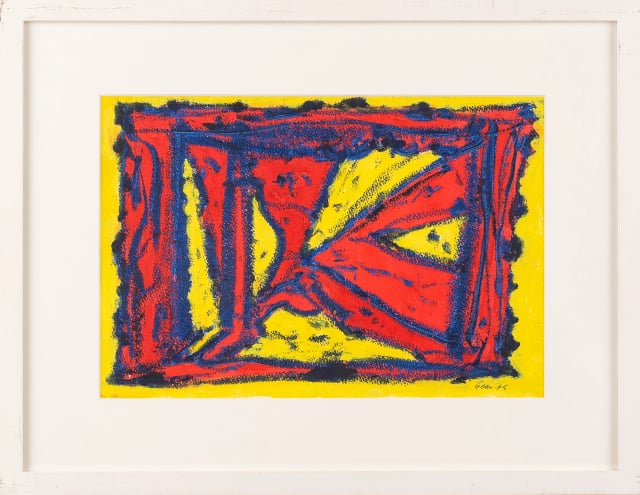
Gear’s paintings and prints are characterised by vibrant colour, dynamic brushwork and expressive, often spontaneous compositions. Although rooted in abstraction, his work retained a strong connection to landscape and the natural world, translating movement, atmosphere and emotion into richly textured surfaces. His willingness to embrace experimentation made him one of the most adventurous artists of his generation and an important bridge between British and European modernism.
Within Sharpe Fine Art’s exhibition narrative, Moving to Modernism – Arriving at Abstraction, William Gear represents the international dimension of British modern art. His work demonstrates that abstraction in Britain developed through an active dialogue with Europe as well as through the St Ives School. Alongside Ben Nicholson, Peter Lanyon and Alan Davie, Gear illustrates the diversity of post-war abstraction, while his connection with the CoBrA movement places British modernism within a wider international context. His work remains a powerful reminder that the story of British abstraction was shaped as much by exchange and experimentation as by place.